
Our work
To connect, collaborate, and lead Pacific policing excellence now and in the future
our work
Led by our guiding principle - ‘By the Pacific, for the Pacific’ - we will support Pacific-led priorities that help keep communities across the Pacific safe and secure by:
- supporting Pacific-led solutions that protect regional sovereignty and maintain positive outcomes for local communities and the region
- building a stronger regional identity and strengthening the collective voice and leadership of Pacific Police Chiefs across the Pacific and internationally
- empowering and strengthening Pacific leadership to drive the design, development and delivery of capacity building initiatives
- improving coordination of the development and delivery of capability priorities through a united regional approach
- maintaining engagement and information sharing with members, partners, donors and relevant regional and international stakeholders
- increasing the Pacific's collective influence on global issues through the principle that Pacific security is global security.
- coordinating PACPOL meetings and maintaining official records and communications
Transition to PACPOL
As part of the transition from the Pacific Islands Chiefs of Police (PICP) and the Pacific Policing Initiative (PPI) to PACPOL, a Pacific-led review was undertaken, in to how the existing regional policing programs collectively supported current and future Pacific priorities. Pacific Police Chiefs endorsed the outcomes of the review, paving the way for the transition to PACPOL.
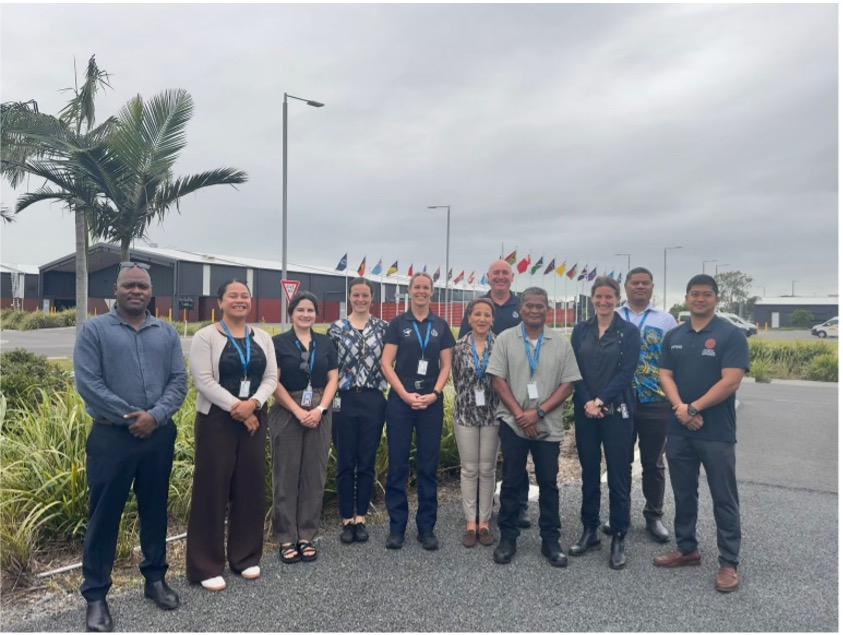
Hub, Brisbane, Australia.
The review confirmed that regional cooperation is important and that Pacific-led initiatives provide value. They also identified ways to improve governance, make priorities clearer, and better align programs to strengthen safety and security across Pacific communities.
In May 2026, the Joint Review Teams presented recommendations about each program to the joint meeting of the PICP Executive Leadership Team and the PPI Leadership Board. Chiefs made decisions based on these recommendations. These review outcomes are an important step in streamlining regional policing arrangements.
The Pacific Transnational Crime Network (PTCN), Women’s Advisory Network (WAN), and Pacific Forensics Working Group (PFWG) will continue under the PACPOL framework. Governance and delivery support for these networks will be strengthened. These networks help police services work together across their areas of law enforcement.
The PACPOL Hub (previously the Pinkenba Development and Coordination Hub) will bring together the existing functions of the Pacific Community for Law Enforcement Cooperation (PCLEC) and the Pacific Police Training Advisory Group (PPTAG). This will create one regional coordination mechanism. The current coordination roles of the PCLEC and PPTAG networks will be replaced by a single network of PACPOL Coordinators, with representation from all PACPOL member organisations.
Dedicated teams will be established at the PACPOL Hub to coordinate capability development and delivery. This work will be coordinated across the Regional Centres of Excellence in Recruit Training and Investigations, Forensics, Specialist Investigations and Transnational Organised Crime, as well as other PACPOL member and partner programs.
The Gender Family Harm (GFH) program will be replaced by a regional initiative that focuses mainly on domestic violence. Early planning has started for a Pacific-led design process to help ensure this future work meets regional needs.
Cyber Safety Pasifika (CSP) will remain an independent preferred provider within the PACPOL structure. It will be supported through Chief-led oversight, the regional coordination mechanism and strategic partnerships.
The transition to PACPOL is underway through the PACPOL Change Program. Work to implement the recommendations has progressed across several of the programs and networks. Planning and engagement activities have started, including consultation on future roles, responsibilities and operational needs. Key reforms currently being developed include a new PACPOL Constitution, Terms of Reference, and governance framework.
Further information about the PACPOL model and programs transitioning to PACPOL will be published as the transition progresses. For questions about program changes during the transition period, contact the PACPOL Secretariat at PACPOL.secretariat@police.govt.nz
PACPOL Strategic Plan
A new PACPOL Strategic Plan will be developed and published once finalised. In the interim, the strategic goals of the PICP Strategic Plan 2025-2029 and the PPI Outcomes Framework provide the strategic drivers for PACPOL.
Guiding principle: By the Pacific, for the Pacific
Mission: To connect, collaborate and lead Pacific Policing excellence now and in the future.
Strategic Coordination:
- Goal One: Looking in - To provide a forum for Chiefs to connect with each other
- Harnessing the collective strength and wisdom of our Chiefs to address our shared policing challenges
- Goal Two: Looking out - Amplify the voice of Chiefs out into the Pacific region
- The voice of Chiefs is heard by leaders, partners, and donors, and is acted upon
- Goal Three: Looking ahead - Grow Pacific Policing Leadership capability
- Growing our leaders today, and into the future
Delivery Coordination:
- Goal Four: To jointly establish an integrated regional policing capability and unify policing arrangements across the Pacific by providing a regional delivery mechanism
- Objectives
- Pacific police meet current and future domestic and regional security needs
- Strengthened and mutually beneficial Pacific policing relationships and networks
- Coherent policing arrangements, standards and practices are implemented by Pacific police
- Pacific police organisations are more resilient